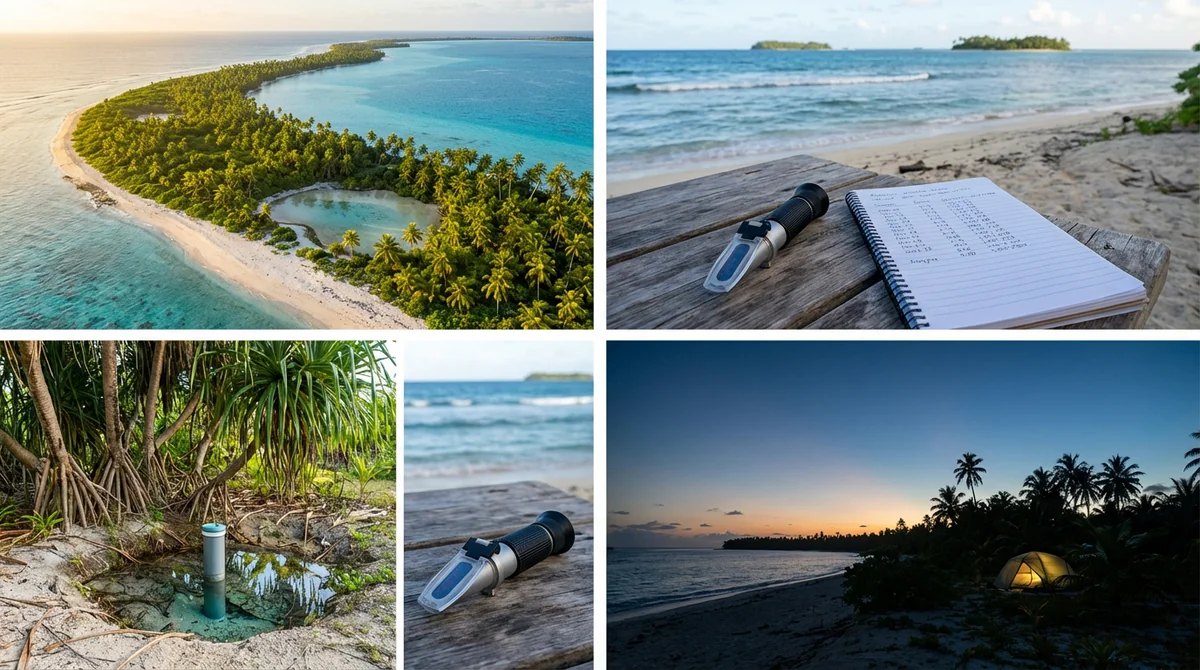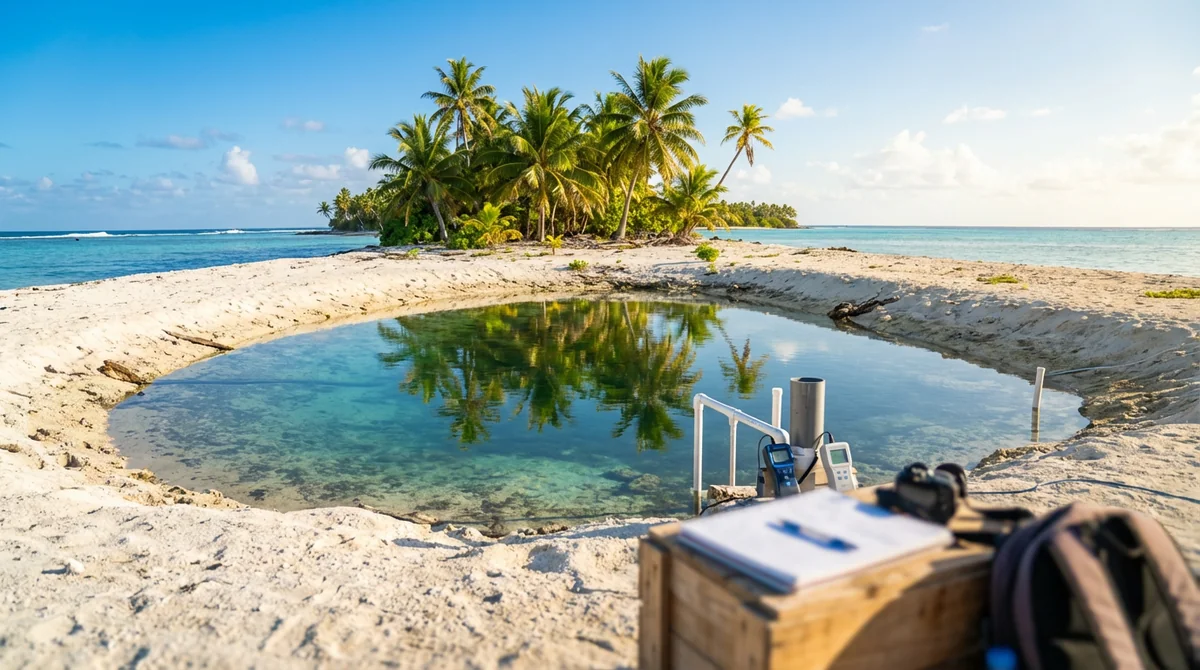
Project coordination for the rehabilitation of maite cultivation pits, hydrological measurement campaigns, and ecological restoration actions.
Actions carried out
- Project coordination
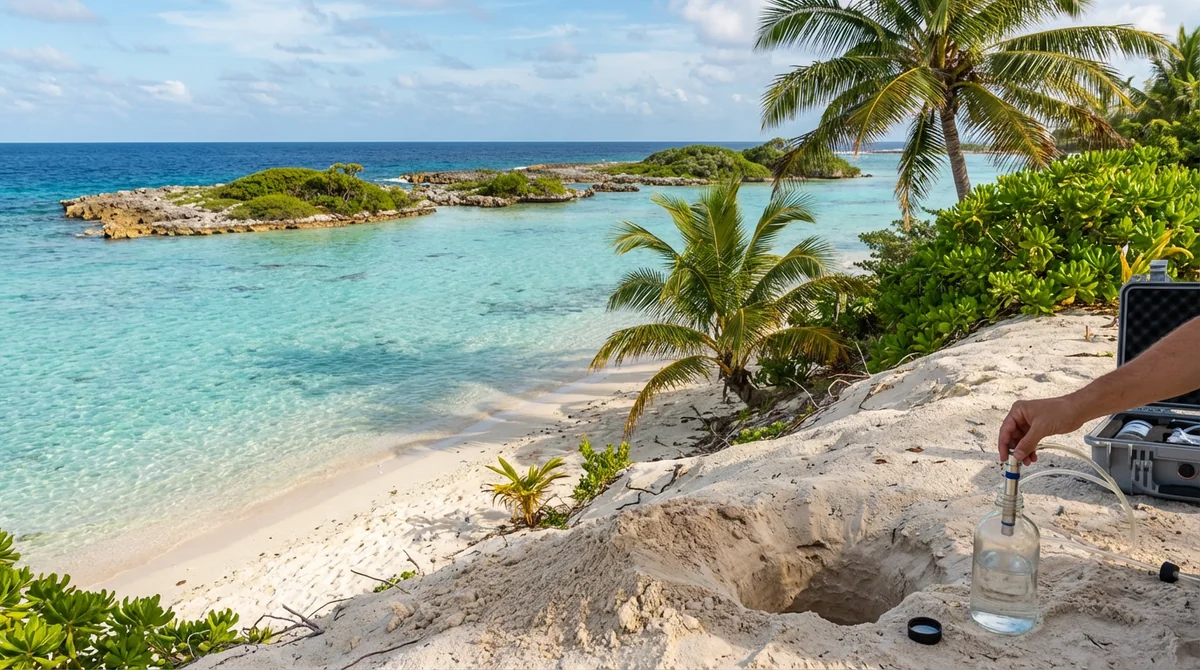
- Hydrological measurement campaigns to monitor and characterise the freshwater lens
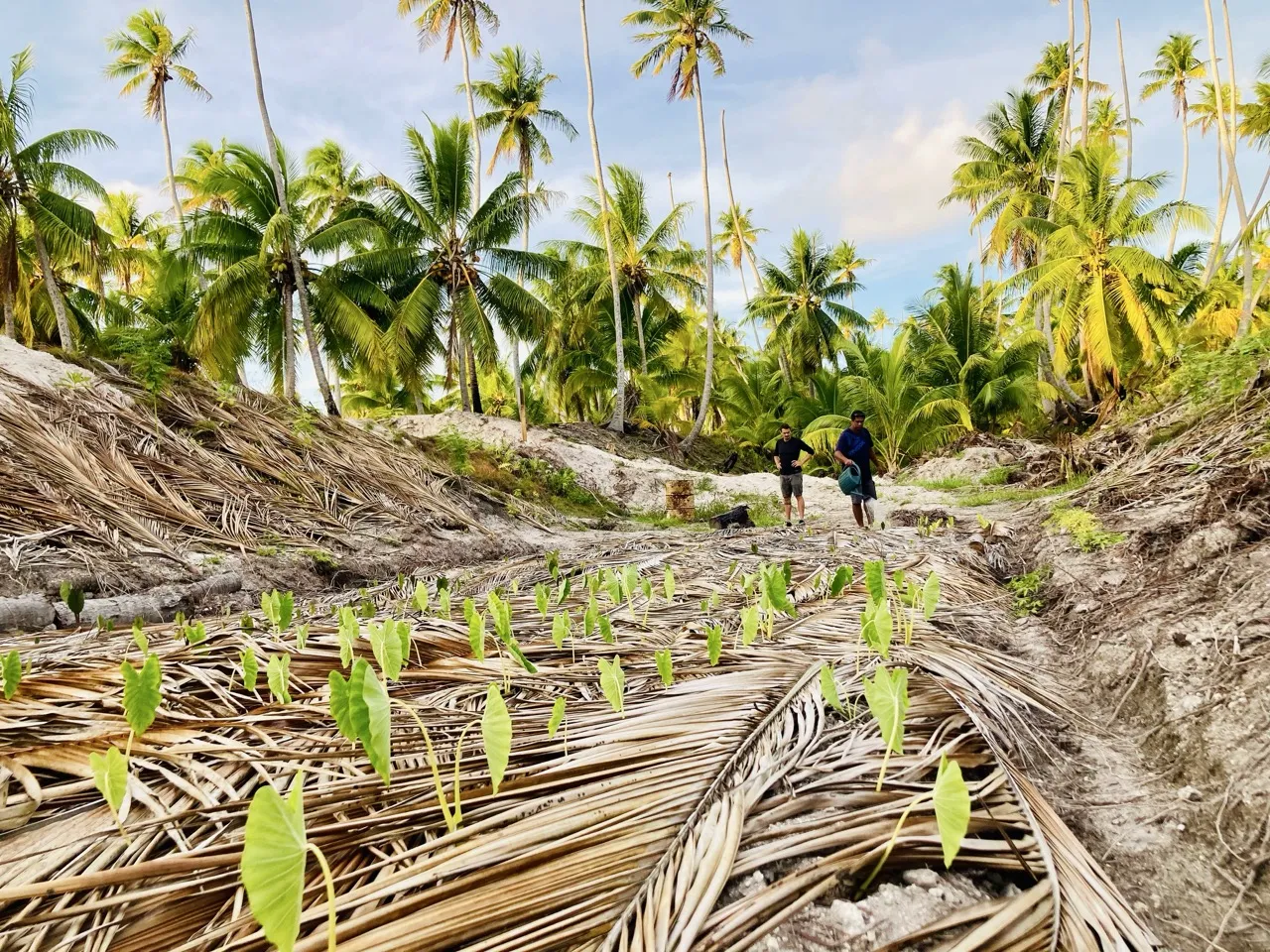
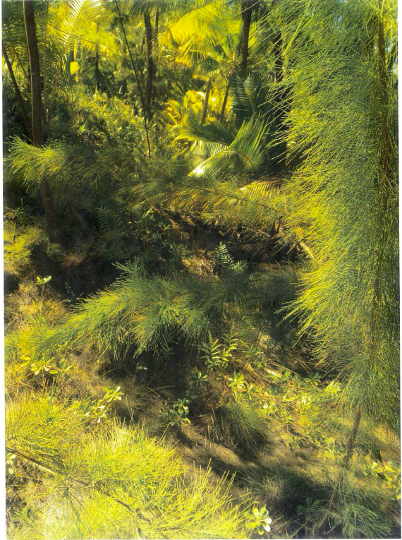
- Rehabilitation of the maite: removal of coconut palms, reconstitution of ancestral compost, restoration of the surrounding natural forest, planting of productive species within the maite
- Knowledge dissemination and outreach
Practical results
- Multidisciplinary studies, field trials, and lessons learned on the rehabilitation of traditional cultivation pits
A project to recover knowledge of how traditional cultivation pits (maite) function in atolls
The project
Vai Natura has been studying the freshwater lenses of atolls for several years — systems whose behaviour remains relatively poorly understood, particularly in relation to land uses such as agriculture and tourism. In this context, Vai Natura collaborated with community associations working to rehabilitate maite, the cultivation pits used by the ancient Paumotu (inhabitants of the Tuamotu archipelago) as a source of food. Today, atoll communities have entirely abandoned this traditional subsistence practice and are heavily dependent on imports (and therefore on supply vessels), making them particularly vulnerable in times of crisis.
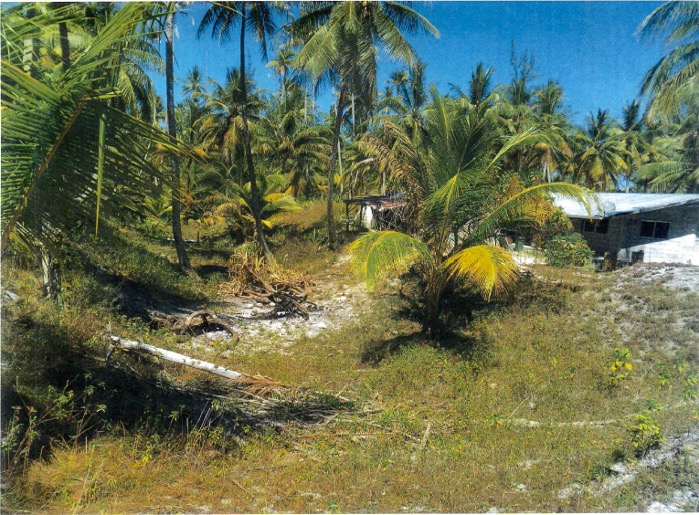
On a positive note, in recent years agricultural projects have emerged in the Tuamotu, for example using intensive agroforestry techniques that dramatically reduce freshwater requirements. However, it would also be worthwhile exploring whether it is possible to revive the practice of maite: is it still viable in the current climatic context? Given today’s land-use patterns? Are local communities willing to reclaim this ancestral practice?
The link between maite and the freshwater lens — used in these pits as a freshwater resource — is particularly significant. It is from these reflections that the Komo Maite project was born, a name meaning “the water of the cultivation pits” in the Paumotu language.
Objectives
Komo Maite aims to recover knowledge of how maite function by cross-referencing ancestral knowledge with new empirical studies (botanical, socio-anthropological, and hydrological), and, drawing on this knowledge, to rehabilitate former maite on the atoll of Nukutavake. The goal is to attempt to reconstruct and refine the lost knowledge of cultivation pits, and — if it proves that cultivation in this form is still viable in the Tuamotu today — to disseminate it widely so that the Paumotu can reclaim this ancestral agrarian practice. This is pursued with a view to food sovereignty, at a time when global change is making isolated atoll communities particularly vulnerable to crises.
Specific objectives
- Understand the functioning of ancestral maite agrarian practices through a nature-culture approach;
- Restore a pilot maite and the surrounding natural forest;
- Enable local communities to reclaim ancestral maite agrarian practices and revive this traditional form of agriculture.
Project phases
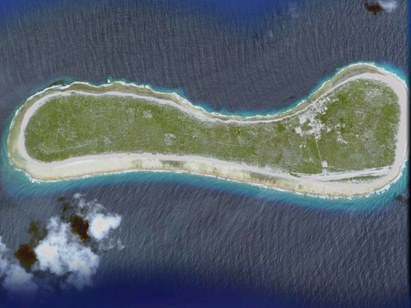
Komo Maite is conducted around the abandoned remnants of the atoll of Nukutavake, with botanical and anthropological expertise and the support of the municipality of Nukutavake and the association Pu Tahi Haga no Ganaa.
The project unfolds in three distinct phases:
- a knowledge acquisition phase, using a nature-culture approach to better understand the physical characteristics, ecological and agricultural functioning, and traditional know-how associated with the cultivation pits;
- an operational phase, drawing on this knowledge to restore a maite, including the surrounding natural ecosystem; and
- a dissemination phase to encourage the local community to appropriate the project’s results.
A partnership project
The project draws on a wide range of expertise: socio-anthropology, restoration of low-atoll forest ecosystems, life-cycle analysis, agronomy, fieldwork, and knowledge transfer. To maximise the project’s success, it has been built as a partnership between several organisations with complementary skills:
- The municipality of Nukutavake, involved from the project’s inception and providing invaluable support for its smooth implementation, community ownership, and outreach.
- Pu Tahi Haga No Ganaa, an environmental association from the atoll of Anaa. The association facilitates the link between Vai Natura and the municipality, contributes expertise in traditional agrarian practices and natural forest restoration in the Tuamotu, and provides technical support for nursery activities.
- Jean-François Butaud, botanist, who conducts the initial botanical study and provides guidance and advice on natural forest restoration actions.
- Frédéric Torrente, anthropologist, who conducts the initial socio-anthropological study on the maite.
Vai Natura, which coordinates the project and conducts the hydrological study of the freshwater lens, is supported by a field agent, Axel Matai, based in Nukutavake, whose role is to oversee field activities: nursery management, maite rehabilitation, natural forest restoration actions, and community liaison. He is supported by a PIAC team from the municipality of Nukutavake, composed of 6 people.
The project is funded under the BESTLIFE2030 programme, financed by the European Union, with the participation of SOCREDO bank.

Contact: contact@vai-natura.com
Co-funded by the European Union. The views and opinions expressed are solely those of the authors and do not necessarily reflect those of the European Union or CINEA. Neither the European Union nor the granting authority can be held responsible for them.